
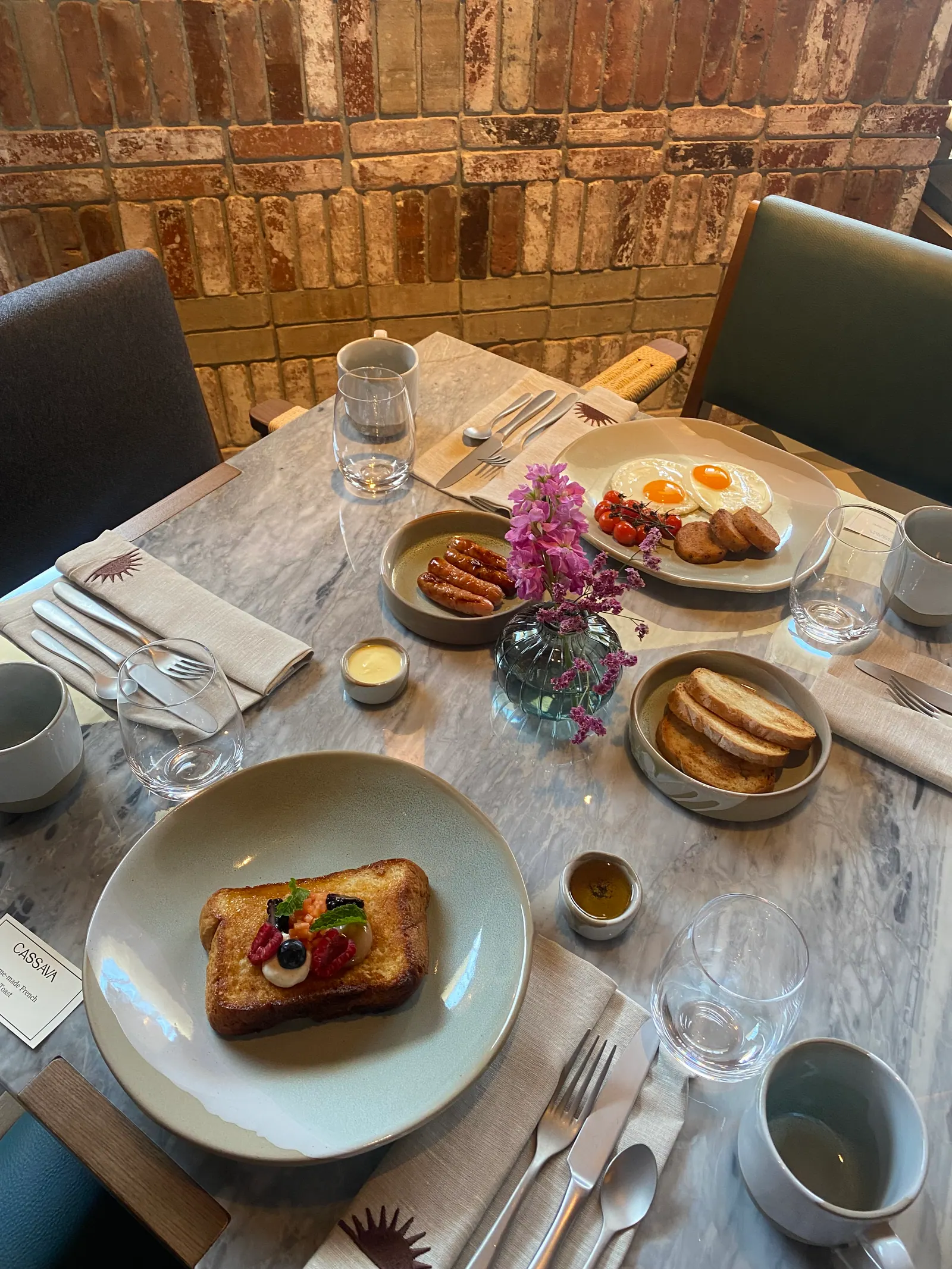
Villa Brunch Schedule: Early Coffee to Final Orders
Organize a villa brunch with early coffee, a shared meal and a clear finish time. Includes a sample schedule for children, late risers and an outing.
A villa brunch needs a beginning and an end even when guests wake at different times. Separating early coffee from the main meal lets children eat before they become hungry and gives late risers a clear window. It also prevents the kitchen from becoming an all-day breakfast counter.
The following schedule is an illustrative plan for eight adults and two children with an afternoon outing. It is not a fixed The Hidden Table package. Move the times to fit the group, then agree the last order and kitchen handover before confirming the booking.
Three service windows instead of one long buffet
At 8:00, offer coffee, drinking water and a small fruit plate for anyone already awake. Keep this first setup compact: it should not require the chef to start ten separate cooked breakfasts while the main meal is being prepared. Ask which children need an earlier hot plate.
At 9:30, bring the group together for the main brunch. One example is soft scrambled eggs, green plantain prepared as mangú, avocado and a bright fruit plate. Serve the onion garnish separately so guests can adjust their plates. Keep coffee replenishment with one assigned person rather than interrupting the cook for every cup.
At 10:30, announce the final cooked orders. A late riser can still receive an agreed portion, but a new menu should not begin after the kitchen has started cleaning. At 11:00, clear the service area and complete the handover. These example times leave a useful gap before departure.
Choose the food around the equipment
Ask whether the stove can handle both the plantain and eggs, and where the fruit will be prepared. If the kitchen is compact, one shared hot dish is easier to serve consistently than an omelette station with individual fillings. A station also needs a place for waiting guests that does not block the kitchen entrance.
Coffee, fruit and avocado can give the meal freshness without adding another cooked course. Offer cheese or other accompaniments only when they suit the group. Confirm allergies and dietary alternatives before shopping; do not assume that a vegetarian plate automatically meets every restriction.
Write down the morning handover
The host supplies the outing departure time and the list of early eaters. The chef confirms the main service window and what can be prepared for late guests. The property contact confirms kitchen access, cups, plates and the place for rubbish. Assign dishwashing explicitly, especially when the house has only one small sink.
Before the team leaves, check that serving dishes are cleared, the coffee setup is either closed or handed over, and any food left for the household has agreed storage instructions. Send The Hidden Table the wake-up pattern, guest count and departure time alongside your private dining request. That information makes a relaxed morning possible.
Explore the ingredients
Discover Caribbean uses, preparation tips and recipes in our ingredient library.
Next experience
Book a table with The Hidden Table
Send your date, group size, and dietary notes, or reserve the next upcoming experience to experience Aurora's cooking in person.
More Articles

How to Plan a Chef-Led Tasting Menu in Punta Cana
A practical Punta Cana tasting-menu guide covering course rhythm, local flavor, villa constraints, guest comfort, staffing, and booking details.
Read Article
Coconut and Seafood: Build Contrast Across Three Courses
Build a three-course seafood menu with a single coconut preparation, contrasting textures and a lighter dessert. Includes a practical menu example.
Read ArticleA Seafood Dinner Timeline: From Delivery to the Table
Plan seafood delivery, refrigerator space and final cooking for a villa dinner, with an example evening schedule and a clear response to late arrivals.
Read Article