
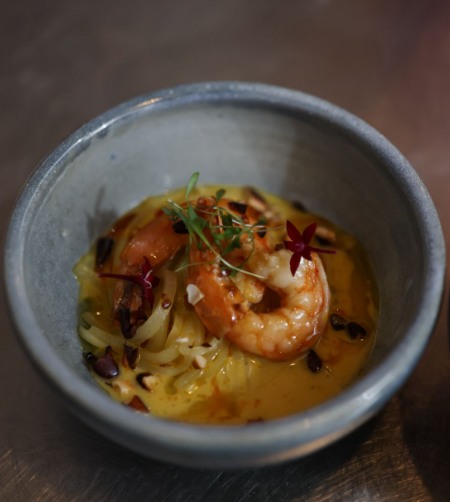
Shrimp in Coconut, Turmeric and Ají Tití Sauce
Make shrimp in a light coconut sauce with turmeric and ají tití. Follow the ingredients, cooking sequence and serving notes from The Hidden Table archive.
This is a shrimp dish with a light coconut sauce, credited to Aurora Despradel in The Hidden Table archive and served there with tayota noodles. Its coconut milk sauce lightly coats the shrimp, with turmeric for color, lime for acidity and ají tití added to taste.
Prepare the accompaniments first. The shrimp finish in the sauce immediately before serving, so the rice or vegetables should not need another long cooking step once the shrimp are ready.
Ingredients
- 500 g cleaned shrimp
- 1 cup coconut milk
- 1/2 white onion, finely chopped
- 2 garlic cloves, finely chopped
- 1/2 teaspoon turmeric
- 1/4 teaspoon oregano
- Up to 1/2 ají tití, finely chopped, adjusted to taste
- Juice of 1/2 lime
- Fresh cilantro, salt and neutral oil
- Optional: 1 teaspoon cornstarch mixed with a little cold water
Adjust the sauce before service
If the sauce is too thick, loosen it with a small amount of water before adding the shrimp. If it is too thin, let it reduce gently first or use the optional cornstarch. Taste again after adjusting the texture, because the salt and lime may need rebalancing. Avoid trying to reduce the sauce with cooked shrimp still in it: they will continue cooking while the liquid evaporates. Set the sides and serving dishes out before the final step.
Cook the sauce before the shrimp
- 1Soften the onion and garlic gently in a little oil. Stir in the turmeric and oregano, then add the coconut milk.
- 2Simmer gently and taste for salt. For more body, stir in the optional cornstarch mixture and cook the sauce before adding the shrimp. Keep the texture light rather than reducing it to a thick paste.
- 3Add the shrimp and cook through. The FDA recommends 145°F (63°C) for most seafood. Check doneness rather than relying on a fixed number of minutes.
- 4Finish with lime, cilantro and a small amount of ají tití. Taste before adding more chile, then serve promptly.
Choose an accompaniment
Use tayota noodles as in the archived presentation, or serve with white rice and a crisp salad. Rice absorbs the sauce; tayota gives a lighter accompaniment with a different texture. Neither choice requires extra coconut in the rest of the meal.
Fit the dish to the service
This preparation suits immediate service better than a long buffet: shrimp become firm if left in hot sauce. Confirm shellfish allergies and coconut restrictions before choosing it for a group. For a full dinner, the coconut and seafood menu guide explains how to balance the surrounding courses.
Explore the ingredients
Discover Caribbean uses, preparation tips and recipes in our ingredient library.
Sources and Further Reading
Next experience
Book a table with The Hidden Table
Send your date, group size, and dietary notes, or reserve the next upcoming experience to experience Aurora's cooking in person.
More Articles
How to Plan a Chef-Led Tasting Menu in Punta Cana
A practical Punta Cana tasting-menu guide covering course rhythm, local flavor, villa constraints, guest comfort, staffing, and booking details.
Read Article
Coconut and Seafood: Build Contrast Across Three Courses
Build a three-course seafood menu with a single coconut preparation, contrasting textures and a lighter dessert. Includes a practical menu example.
Read ArticleA Seafood Dinner Timeline: From Delivery to the Table
Plan seafood delivery, refrigerator space and final cooking for a villa dinner, with an example evening schedule and a clear response to late arrivals.
Read Article