
The Hidden Table · 2026-09-04
Yuca
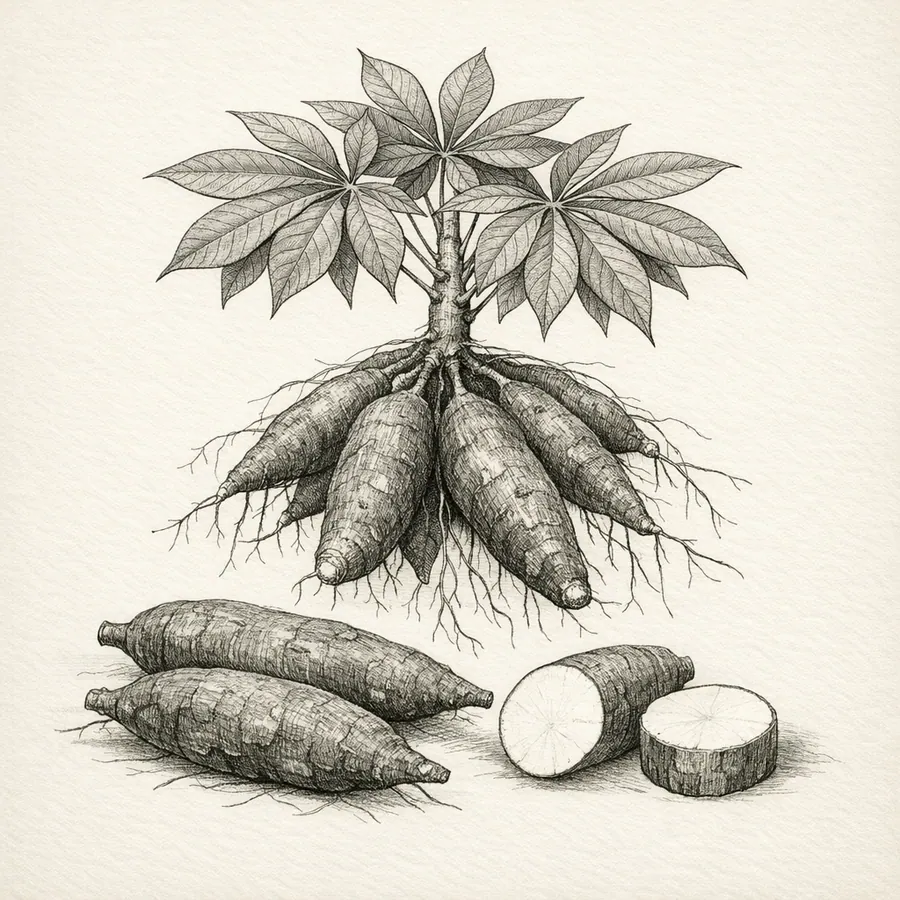
Yuca is a root ingredient whose culinary character is mild, starchy and substantial, with texture determined by moisture and heat. The practical starting point is to prepare the edible form correctly, then boil, steam, roast, fry or grind according to the dish. Variety, freshness and the exact edible form still matter, so the cook should taste and assess the ingredient before assigning its role in the dish.
Caribbean uses
Across Caribbean kitchens, Yuca may appear in casabe, yuca hervida, arepitas de yuca, sancocho. Practices vary by island and household, so this page treats those dishes as context rather than claiming one universal tradition.
Preparation and storage
Wash and prepare Yuca according to its edible form; do not use raw material that requires specialist processing.
Recipe
Warm Yuca with citrus and herbs
4 side portions
Ingredients
- 500 g edible Yuca, prepared as required
- 30 ml lime or bitter-orange juice
- 15 ml olive or coconut oil
- 10 g chopped herbs
- 3 g fine salt
Method
- Wash and prepare Yuca according to its edible form; do not use raw material that requires specialist processing.
- Cook in unsalted water or steam until fully tender; drain well.
- Fold with citrus, oil, herbs and salt.
- Taste, adjust and serve warm.
At the table
Yuca can give a menu a clearer sense of place and purpose. Used with restraint, it contributes contrast, aroma, body, color or familiarity without asking the ingredient to carry more story than the plate can support.
At The Hidden Table, we adapt Yuca to your guests, occasion and the best food-grade form available, making its role in the meal intentional and the experience uniquely yours.