
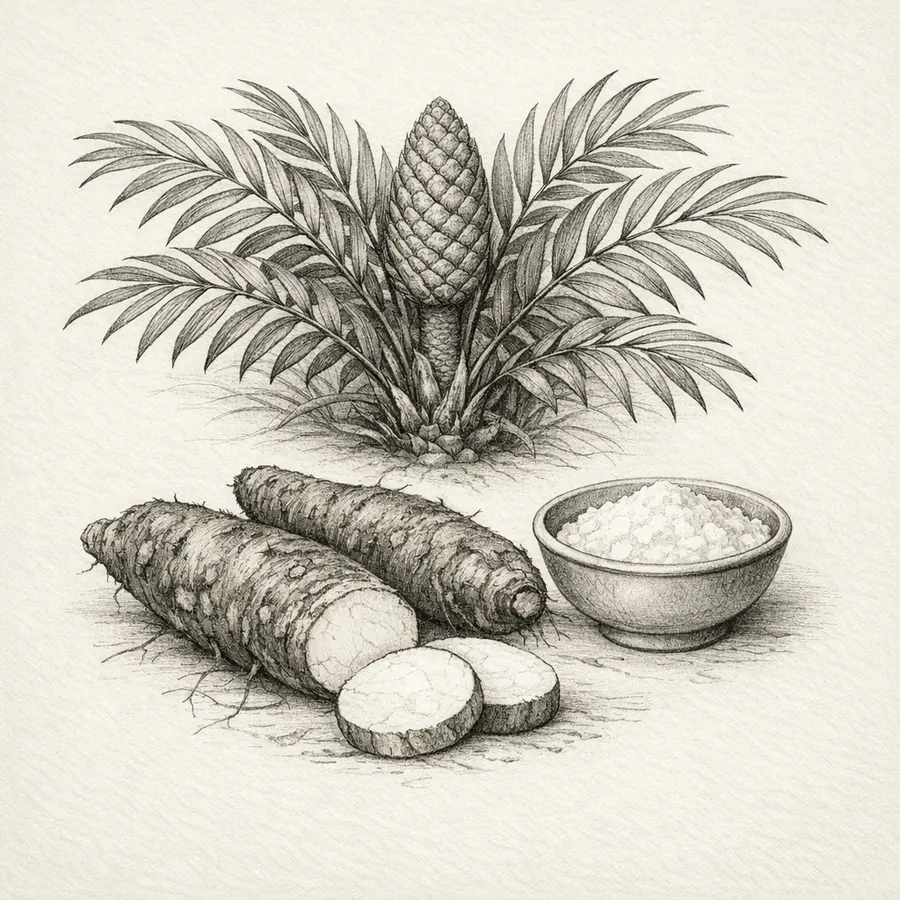
Guáyiga
Guáyiga is a Caribbean root with a substantial and starchy role in the kitchen. It becomes useful when the cook gives it a clear job: comfort, brightness, aroma, body, crunch, heat, or cultural memory.
Guáyiga is a Caribbean root with a substantial and starchy role in the kitchen. Its flavor depends on freshness, maturity, cut, and heat, so it can read as substantial and starchy. Its character changes again when it is boiled until tender, fried until crisp, mashed with citrus and garlic, and roasted under fish or braised meats. Guáyiga is easiest to appreciate when the preparation is specific. Instead of describing it in abstract flavor language, point to the technique: boiled until tender, fried until crisp, mashed with citrus and garlic, and roasted under fish or braised meats. That is where the ingredient starts to become useful to a guest.
Root crops carry Indigenous agricultural knowledge, conuco farming, careful processing, and the everyday intelligence of kitchens that needed food to be generous, portable, and filling. That history becomes meaningful at the table when Guáyiga is connected to a real preparation, not just named on a menu. Dishes such as boiled viveres, mofongo-style mashes, fritters, and sancocho give the ingredient context guests can taste.
Guáyiga works best when its role is specific. In traditional and contemporary menus, it can support dishes such as boiled viveres, mofongo-style mashes, fritters, sancocho. A server should be able to describe Guáyiga in one useful sentence: where it came from, how it was prepared, and what it changes in the dish.
Guáyiga is commonly boiled until tender, fried until crisp, mashed with citrus and garlic, roasted under fish or braised meats. Typical Caribbean uses include boiled viveres, mofongo-style mashes, fritters, sancocho.
Slow energy, satisfying starch, and useful minerals such as potassium when served simply.
Uses at the table
- Guáyiga can be roasted under fish or braised meats when the menu needs a direct, recognizable preparation.
- Guáyiga can appear in sancocho to connect the dish to everyday Caribbean cooking.
- Guáyiga can be paired with citrus, herbs, chile, coconut, smoke, or sea salt so the flavor feels intentional rather than flat.
- Guáyiga can be scaled for a tasting menu as a small, precise element or served family-style when generosity matters more than formality.
- Guáyiga can help a server tell a short story about season, source, technique, or memory without turning dinner into a lecture.
What does Guáyiga taste like?
Guáyiga does not have one fixed taste. It changes with source, maturity, and technique, but the most important cues are substantial, starchy, and how it carries seasoning.
Where is Guáyiga commonly used?
You will often see Guáyiga around boiled viveres, mofongo-style mashes, fritters, sancocho, though the exact use changes by island, household, and season.
How should Guáyiga be prepared?
Start with the traditional logic of the ingredient: boiled until tender, fried until crisp, mashed with citrus and garlic, roasted under fish or braised meats. Then add contrast with acid, salt, herbs, heat, fat, or crunch.
Why does Guáyiga matter for The Hidden Table?
Guáyiga helps connect private dining to Caribbean place and memory. It gives the menu cultural weight without needing the plate to feel old-fashioned.