The Hidden Table · 2026-11-12
Ugali at a Private Table: Firm or Soft, and How to Tell Before It's Served
Wondering whether your private dinner's ugali should be firm or soft? You will be better able to brief your chef on the consistency you want and the timing that shapes it.
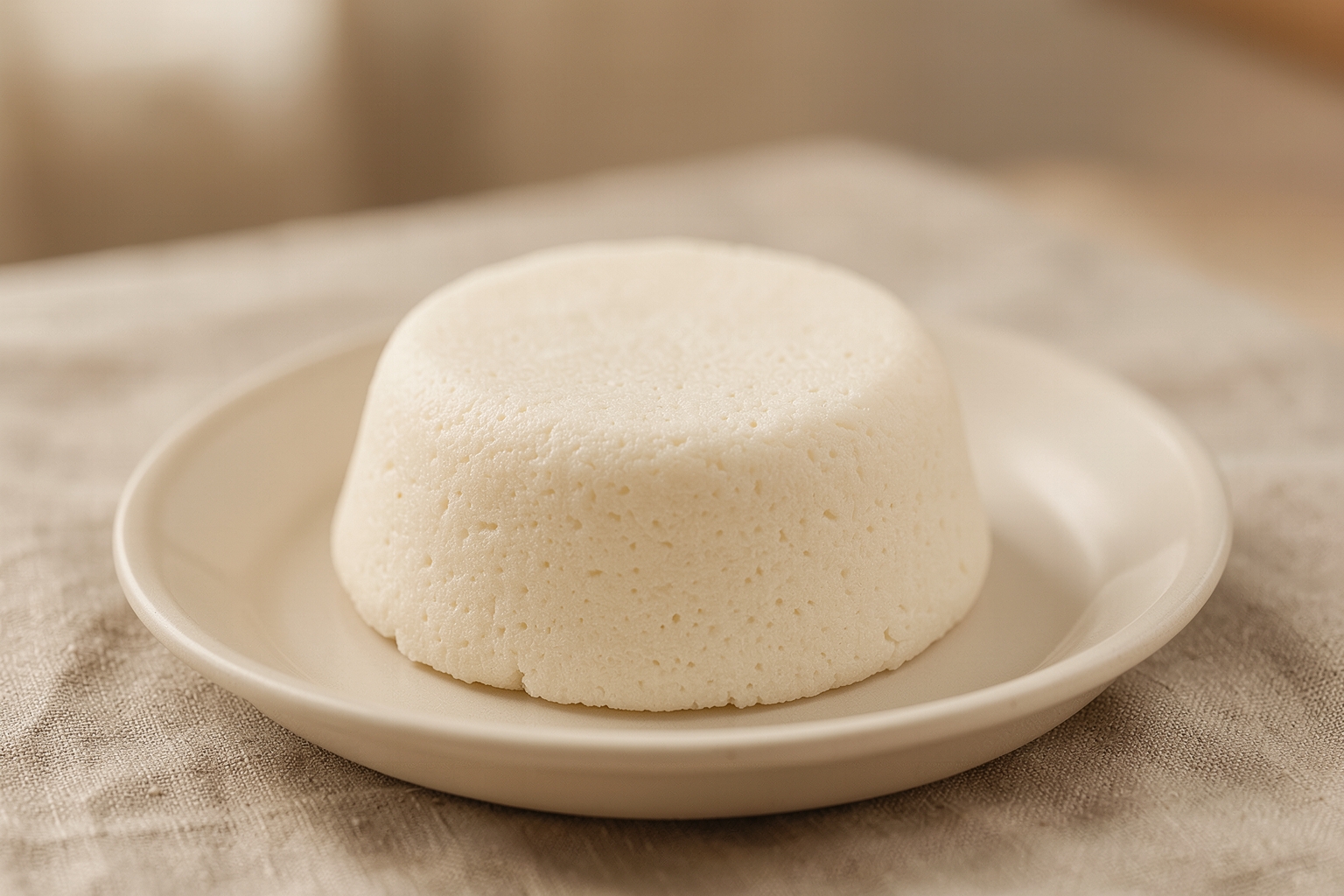
You are planning a private dinner and cornmeal is on the menu.
The finished plate arrives as a smooth, molded round, and nothing about it tells you whether the cook intended a firm dough or a soft, spoonable version.
That ambiguity is the actual problem: ugali is deliberately made in more than one consistency, and the difference is decided mid-cooking, not at the table.
This article walks through the documented two-stage flour addition in a published ugali recipe.
It also shows the visible porridge checkpoint where the texture decision happens.
Finally, it gives questions worth asking a private chef before and during service.
The cooking method here comes from the Boston Medical Center Teaching Kitchen recipe bmc.org.
What a particular chef will prepare remains a question to confirm, not a promise.
One dish, two documented consistencies
The BMC Teaching Kitchen recipe opens with the key fact: ugali, a basic staple eaten across several African countries, differs mainly in name and consistency, hard or soft.
The same cornmeal base can land at either end depending on how the flour is added and how much water is used.
In some English-speaking countries the cornmeal base is also called posho.
Related preparations appear under other names: fufu in West Africa, and ugali in Kenya and Tanzania.
For a host, that range matters.
If you have eaten ugali before, the version you remember may not be the version your chef plans.
Asking about the intended consistency is a legitimate question about a documented variation, not a fussy request.
The two-stage flour addition, step by step
The published recipe uses four cups of water and two cups of fine corn flour, also called maize flour.
The flour does not go in all at once.
It is added in two portions, and the first stage is where the texture is set up.
- Bring four cups of water to a boil over high heat.
- Add one and a half cups of the corn flour, stirring constantly with a spoon to remove all lumps, then reduce the heat to medium-low.
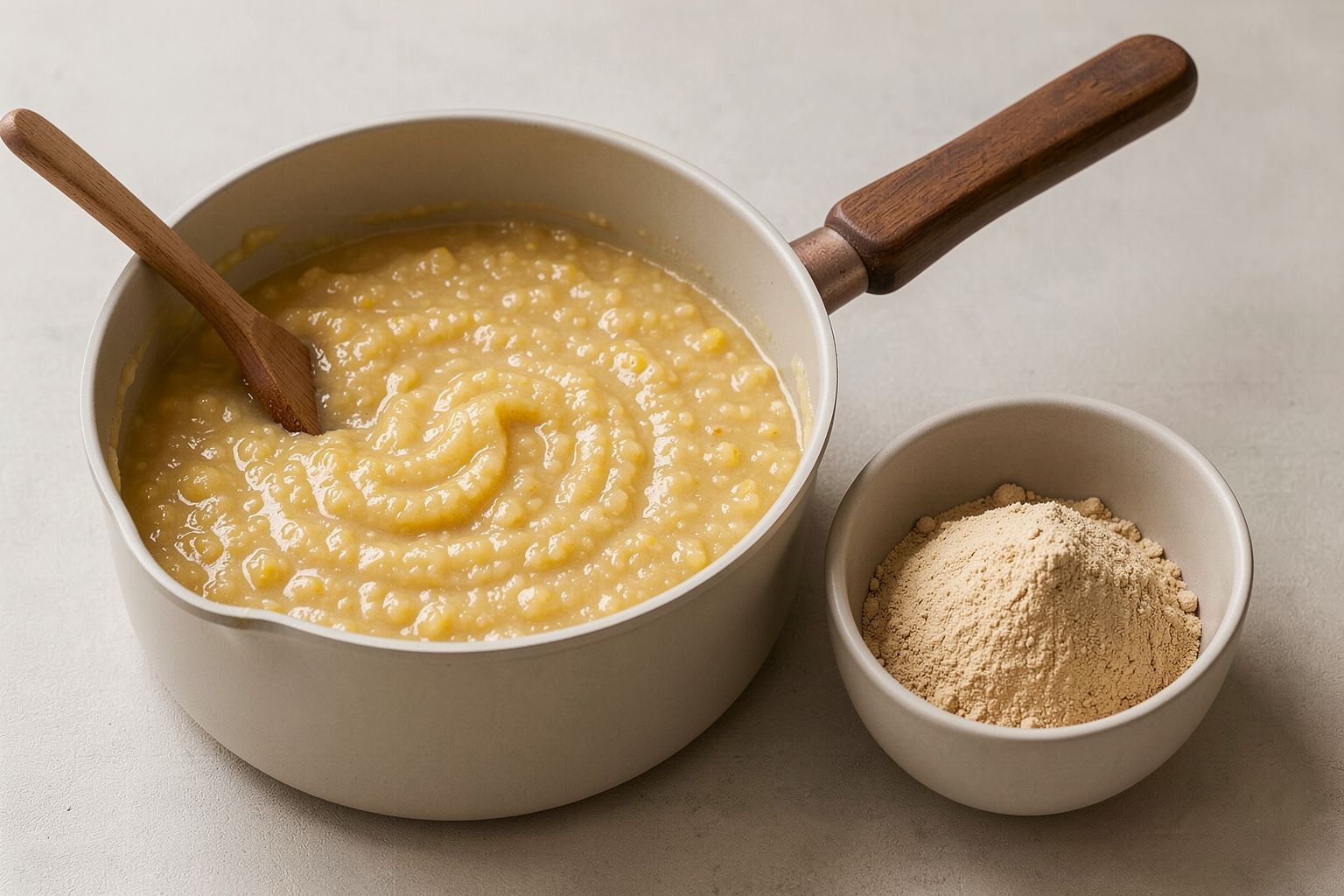
- Keep stirring until the mixture thickens into a porridge consistency. The recipe notes you may need to take the saucepan off the heat while getting rid of lumps to prevent burning.
- Cover the pot and leave it to cook for about two to five minutes.
- Add the rest of the flour to make the consistency harder, almost like play dough, mixing until all the flour is incorporated and mashing any lumps or chunks.
- Keep working the ugali until it reaches a firm or soft dough-like consistency.
- Mold it in the middle of the pot into a round shape and place it on a serving dish.
The recipe notes cornmeal needs about fifteen minutes or more of cooking to remove the raw taste and corn powder chunks.
Be prepared to do some stirring to reach a smooth paste.
Total time is listed as thirty minutes, with ten minutes of prep and twenty minutes of cooking.
Why the porridge checkpoint matters
The first stage is not a warm-up.
It is a distinct, observable state: the mixture has thickened into a porridge, it is still stirrable, and the lumps have been worked out before the pot is covered.
Only after that covered rest of roughly two to five minutes does the remaining flour go in.
That staging is what separates the two documented outcomes.
The first portion builds the porridge base; the second portion, worked in afterward, drives the mixture toward the harder, play-dough-like consistency.
If all the flour went in at once, that porridge stage would be skipped entirely, along with the covered two-to-five-minute cook the recipe places there.
For a guest at a private table, this gives you something concrete to recognize or ask about.
A pot at the porridge stage looks and behaves differently from finished ugali.
It moves when stirred, has not yet been molded, and is still being worked to remove lumps.
That is the checkpoint where the final texture is still open.
The levers that set firm versus soft
The recipe names two documented levers, and both are worth knowing before you talk to a chef.
First, water.
The ingredient list calls for four cups of water, or more for softer ugali.
The ingredient list allows more water for softer ugali; the stated four cups is the baseline for the recipe as written.
Second, cooling.
The recipe states plainly that cornmeal hardens as it cools down.
So a batch that seems soft in the pot will firm up on the way to the table.
If you want really soft ugali, the recipe's own advice is to use more water.
The texture you taste at service reflects both the mixing and the time since it left the heat.
That is a fair thing to ask about when planning timing for a multi-course dinner.
What the recipe does not do is declare one consistency correct.
Firm and soft are both documented outcomes of the same method, reached by staging the flour and adjusting the water.
Which one suits your table is a preference to discuss, not a rule to enforce.
A worked example of the checkpoint
To make the sequence concrete, here is a clearly hypothetical teaching example, not a report of any real kitchen or customer result.
Imagine a pot on medium-low heat.
The first cup and a half of corn flour has been stirred in.
The mixture has thickened into a glossy, stirrable porridge, with lumps pressed out against the pot's side.
The cook lifts the pan off the heat briefly while finishing that work, as the recipe suggests, to keep the base from burning.
The lid goes on for the documented two to five minutes.
When it comes off, the remaining half cup of flour is worked in.
The mixture stops flowing and holds together, reaching the firm, dough-like state the recipe describes before molding into a round.
Each observable in that sequence comes from the published steps: the porridge consistency, the off-heat lump removal, the covered rest, the second flour addition, and the molding.
If you ever watch a chef work with cornmeal, those are the states you can look for.
Questions to bring to your chef
The recipe documents the method; it does not tell you what any particular chef serves or how they stage their flour.
Those are exactly the things to confirm.
A short checklist, with a distinct consequence for each answer:
- Which consistency do you plan to serve? If the answer is firm, you can expect a dough that holds its molded shape; if soft, ask whether extra water beyond the recipe's four-cup baseline is part of that plan.
- Do you add the flour in two stages? If yes, the porridge checkpoint and the covered two-to-five-minute rest are part of the method; if the chef uses a different staging, ask them to describe it, since the published recipe is one documented approach, not the only one possible.
- When will it be molded relative to service? Because cornmeal hardens as it cools, the gap between the pot and the plate affects the texture you receive. Confirming timing helps you know what to expect, though it cannot guarantee the served texture in advance.
- What will accompany it? The recipe notes that ugali is very bland on its own but delightful and quite filling when paired with beef stew, vegetables like spinach, or a protein like fish. Confirming the pairing is a menu question, not a texture one.
Asking these questions does not ensure the dinner matches your expectations; it replaces guessing with a stated intention you can reconcile before the evening.
A reply from a chef is a proposal to confirm against your booking, not by itself proof that every term is settled.
Reading a finished plate
Once you know the method, a served ugali tells you more.
A molded round that holds its shape sits toward the firm end of the documented range.
A softer version, made with more water, will be more yielding.
Neither is a mistake; both are documented outcomes.
What the plate cannot tell you is the intention behind it, which is why the conversation belongs before service, at the booking stage.
If you are building a brief for a private dinner, the consistency question fits naturally alongside timing, pairings and kitchen access.
It is one more line that turns a general request for cornmeal into a specific, checkable plan.
Where this fits in a villa dinner plan
Cornmeal dishes reward early clarity, the same way seafood timing and handover details do.
Compare a private chef with a restaurant in Private Chef or Restaurant? Choose the Right Format for Your Group.
Or look at the broader setting in private dining dominican republic.
For the practical side of handing your kitchen over, the checklist in Prepare Your Villa for a Private Chef: A Handover Checklist covers what to prepare before the chef arrives.
And since ugali is built on corn flour, the background in Cornmeal is a useful companion read.
Ugali is documented in both firm and soft consistencies.
Texture is decided at the two-stage flour addition, with the porridge checkpoint and water level as the levers.
Cooling hardens the result.
With those facts, you can ask a chef which version is intended and how the flour will be staged, and plan your table around a stated answer rather than a guess.
Experience The Hidden Table. Bring your curiosity about Dominican food to your next dining experience.
Explore The Hidden Table experiences and book an experience.