
The Hidden Table · 2026-10-27
Beef tripe
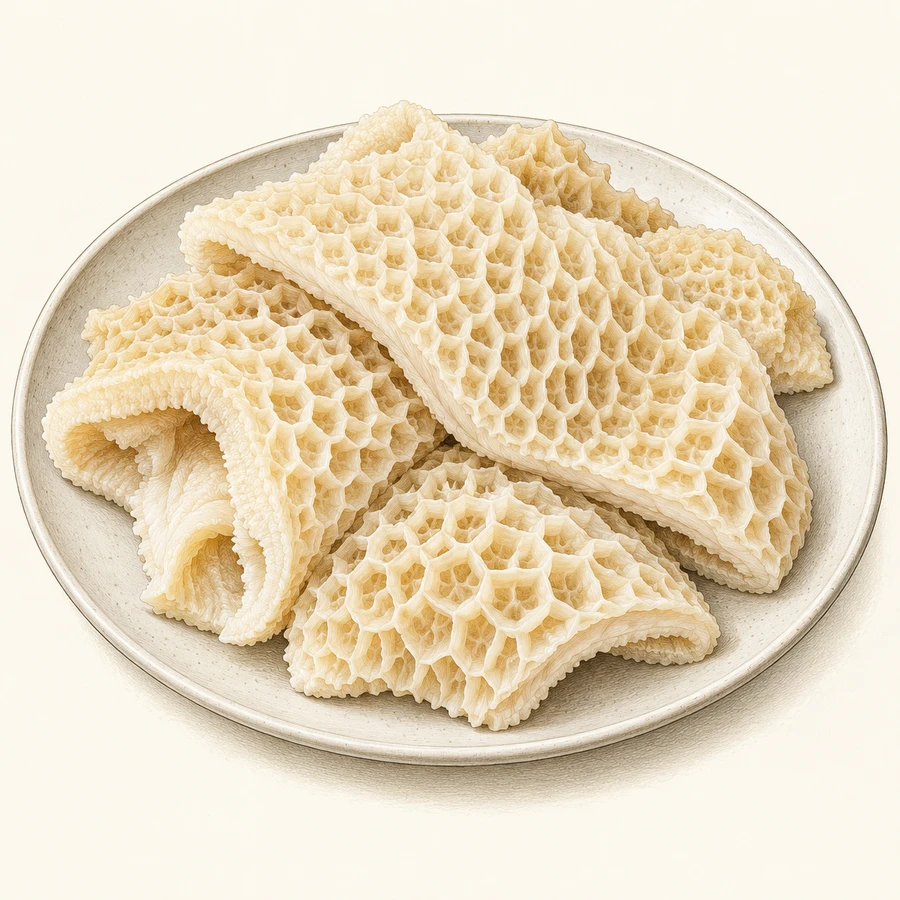
Tripe is stomach lining, most commonly sold from beef, and can be smooth or honeycomb-textured. Cleaned, scalded and fully cooked products are different. The recipe explicitly requires fully cooked food-grade tripe; a pale appearance alone does not establish that status.
Caribbean uses
A tomato-and-oregano sauce gives the already cooked strips a practical Dominican-style setting. Starting from a known cooked product avoids disguising an undefined raw preparation as a short stew.
Preparation and storage
Keep raw meat separate from ready-to-eat foods and do not wash it in the sink. Thaw in the refrigerator, use clean separate utensils and check the thickest center with a food thermometer rather than relying on color.
References and recipe note
The references support the ingredient and handling notes. The recipe is a THT editorial adaptation, not a recipe attributed to these sources or a claim of kitchen testing.
Recipe
Cooked tripe in tomato sauce
4 small portions
Ingredients
- 500 g commercially cleaned fully cooked beef tripe, chilled, cut into strips
- 300 g washed tomato, chopped
- 150 g peeled onion, chopped
- 200 ml unsalted stock
- 15 ml oil
- 1 g dried oregano
Method
- Confirm the supplier’s product is fully cooked, not merely cleaned or scalded raw tripe. Follow its reheating label; this recipe is not a raw-tripe cleaning method.
- Soften onion in oil 5 minutes, add tomato, stock and oregano and simmer 10 minutes.
- Add cooked tripe and simmer gently 20–30 minutes until hot throughout, at least 74°C / 165°F, and tender. Extend if necessary, taste before salt and serve hot.
At the table
Its patterned texture provides a distinct course when preparation status is clear.
At The Hidden Table, we choose the cut, cooking method and portion around your guests, letting a well-prepared ingredient anchor a meal made uniquely for your table.
Plan a menu with The Hidden Table