
The Hidden Table · 2026-10-27
Tamarind paste
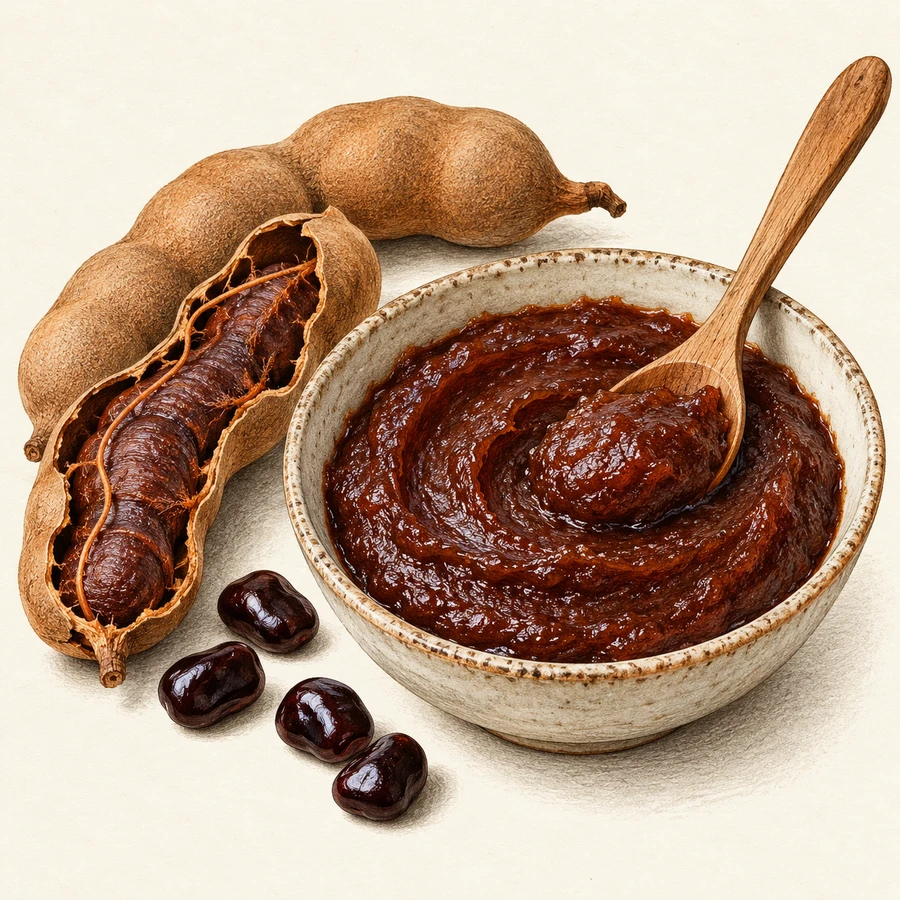
Tamarind paste is pulp separated from the fruit’s brittle shell, fibers and seeds. Unsweetened paste, sweetened paste and concentrated extract differ greatly in strength.
Caribbean uses
Tamarind gives drinks and sauces a fruity acidity. Diluted paste can balance a glaze for roasted vegetables; taste before adding citrus or more sugar.
Preparation and storage
The recipe uses seedless unsweetened pulp paste, not a concentrated extract. Loosen with warm water and strain out any remaining fibers.
References and recipe note
The references support the ingredient and handling notes. The recipe is a THT editorial adaptation, not a recipe attributed to these sources or a claim of kitchen testing.
Recipe
Tamarind paste: small fruit-dessert syrup
About 200 ml
Ingredients
- 30 g Tamarind paste — seedless unsweetened pulp paste, not concentrate
- 150 ml water
- 40 g sugar
Method
- Combine water and sugar and bring to a gentle simmer.
- Whisk in the seedless unsweetened pulp paste and simmer gently 3 minutes until dispersed.
- Strain out any remaining fibers, cool promptly and spoon a little over fruit. Refrigerate immediately and use the same day.
At the table
It supplies a rounded fruit acidity that is different from the direct sharpness of lime.
At The Hidden Table, we select the product, portion and accompaniment for your guests, letting a measured amount bring contrast to a meal created for your table.
Plan a menu with The Hidden Table