
The Hidden Table · 2026-10-27
Tamarind
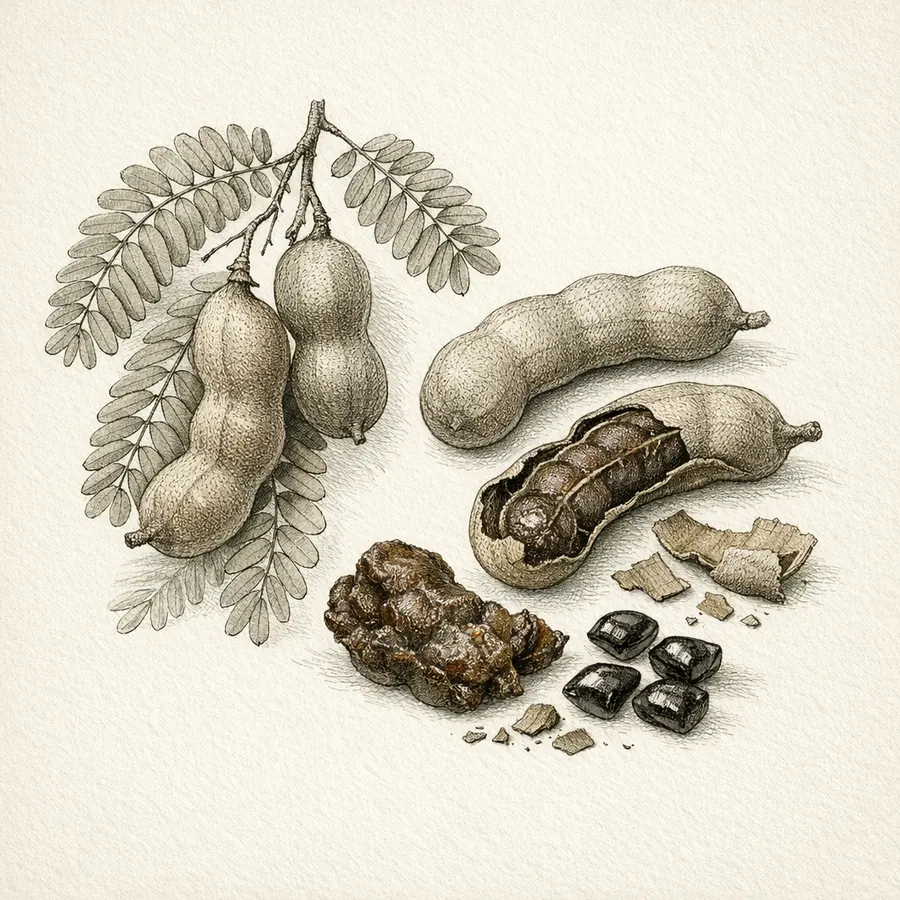
Tamarind has sticky brown sweet-acid pulp around hard seeds inside a brittle pod. Plain pulp blocks, sweetened syrups and concentrated pastes have different strengths; they are not equal spoon-for-spoon.
Caribbean uses
A strained tamarind refresco carries its acidity into a drink. In savory cooking, a smaller amount can season a sauce, but the drink proportions should not be transferred unchanged to a glaze.
Preparation and storage
For this drink choose a plain unsweetened pulp block, not concentrated paste. If starting from pods, remove shell and coarse strings first. Soften pulp in water and strain without grinding the seeds.
References and recipe note
The references support the ingredient and handling notes. The recipe is a THT editorial adaptation, not a recipe attributed to these sources or a claim of kitchen testing.
Recipe
Fresh tamarind drink
4 glasses of about 250 ml
Ingredients
- 100 g unsweetened tamarind pulp block, not concentrated paste
- 400 ml hot water, plus cold water to reach 1 litre after straining
- 50 g sugar, adjusted to the fruit’s acidity
Method
- Break the pulp block into a heatproof bowl and cover with the measured hot water. Leave 15 minutes, then loosen with a spoon; do not crush any hard seeds.
- Press gently through a sieve. Discard seeds and fibers. Dissolve sugar in the strained liquid and add cold water to make 1 litre.
- Taste, chill promptly and serve cold. Keep covered in the refrigerator; it is a fresh drink, not a preserved syrup.
At the table
Its sweet-acid flavor is distinct from lime, giving a different character to a cold drink.
At The Hidden Table, we choose the ripeness, portion and pairings around your guests, turning this ingredient into a considered part of an experience made uniquely for your table.
Plan a menu with The Hidden Table