
The Hidden Table · 2026-10-27
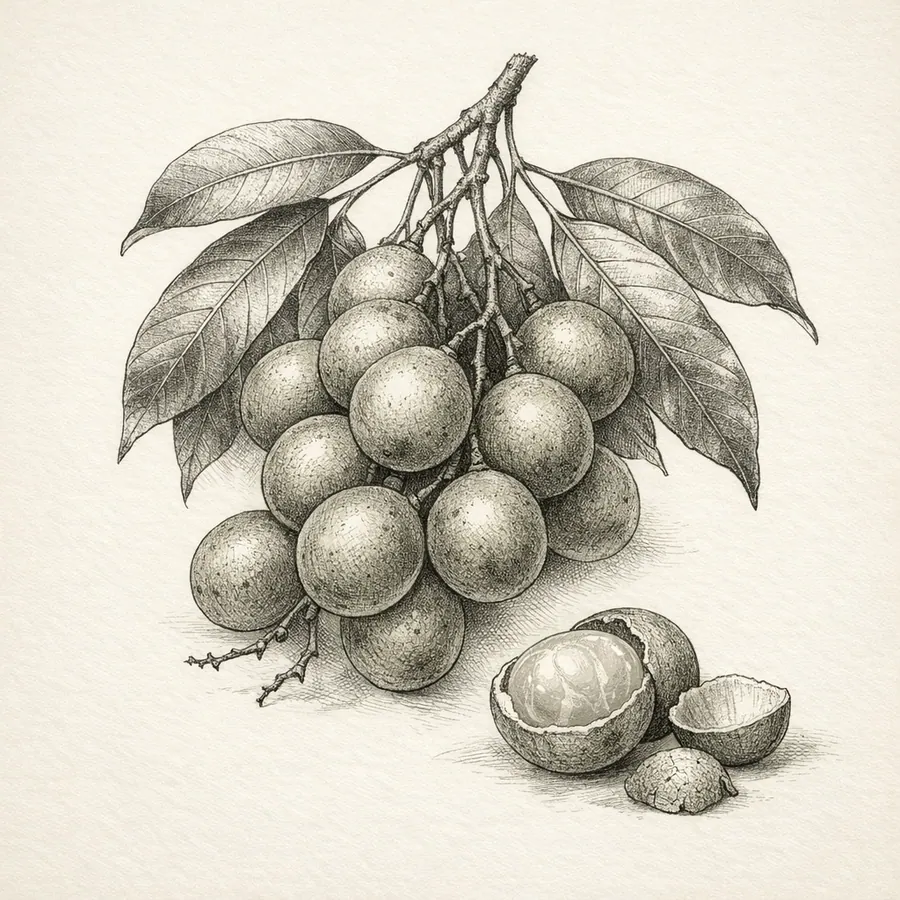
Spanish lime (limoncillo)
Limoncillo, quenepa and guinep are names for Melicoccus bijugatus, not citrus limes. A thin green shell encloses sweet-tart pulp clinging to a large hard seed; the whole fruit is not a seedless salad cube.
Caribbean uses
The seed-free pulp can flavor a small fresh drink. The three market-name profiles share this preparation intentionally; different names alone do not establish different fruits.
Preparation and storage
Wash before shelling. Carefully separate the edible pulp from every seed; buy prepared seed-free pulp if separation is impractical. Do not crush seeds, blend whole arils with seeds, or serve whole seeded fruit as a small child’s snack.
References and recipe note
The references support the ingredient and handling notes. The recipe is a THT editorial adaptation, not a recipe attributed to these sources or a claim of kitchen testing.
Recipe
Strained fresh fruit drink
4 small glasses
Ingredients
- 200 g spanish lime (limoncillo), prepared edible pulp only, completely free of shell and hard seeds
- 600 ml drinking water
- 20 g sugar, adjusted to the fruit
Method
- Wash and prepare the specified fruit portion. Keep all hard stones, shells and inedible peel out of the drink.
- Blend only the prepared seed-free pulp with half the water and strain remaining fibers.
- Add the rest of the water and sugar. Taste, cool promptly if heated, then refrigerate and serve cold the same day.
At the table
The sweet-acid pulp is the ingredient; the shell and hard seed do not belong in the finished drink.
At The Hidden Table, we confirm the culinary form and choose portions and pairings for your guests, giving the ingredient a clear role in a meal made uniquely for your table.
Plan a menu with The Hidden Table