
The Hidden Table · 2026-10-27
Edible seaweed (nori example)
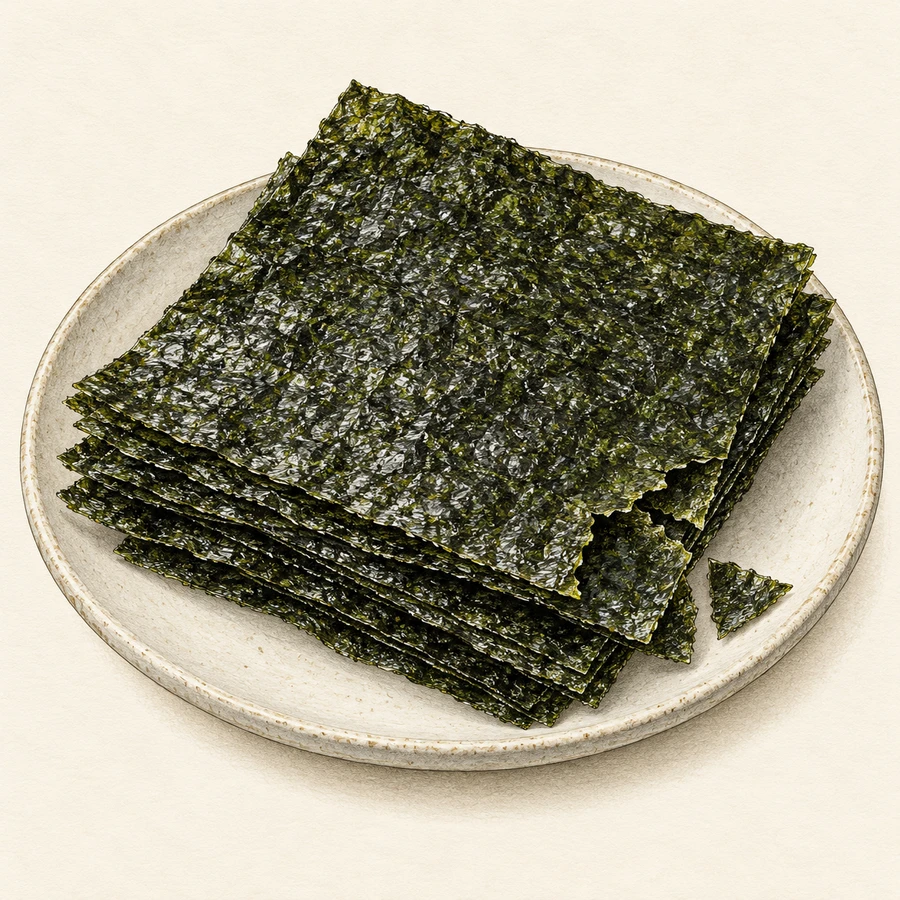
Seaweed is a broad group, not one ingredient with a universal setting ratio. This recipe selects plain roasted nori sheets, which are cut as a topping; it does not ask whole seaweed to act like agar. Other species and products need their own preparation.
Caribbean uses
A small nori topping adds a crisp savory element to rice as a contemporary table adaptation. It is not presented as a traditional Caribbean seaweed preparation or a health intervention.
Preparation and storage
Buy a labeled edible species from a reliable supplier. Iodine varies greatly across seaweed products, so do not treat a spoonful as a controlled iodine supplement or substitute high-iodine kelp into this recipe.
References and recipe note
The references support the ingredient and handling notes. The recipe is a THT editorial adaptation, not a recipe attributed to these sources or a claim of kitchen testing.
Recipe
Rice with a small nori topping
4 small side portions
Ingredients
- 2 g plain roasted ready-to-eat nori sheets, cut into thin strips
- 400 g freshly cooked hot rice
- 150 g washed cucumber, diced
- 10 ml olive oil
Method
- Choose labeled plain roasted nori, not kombu, unidentified beach seaweed or agar. Check any iodine or other guest-specific restriction before serving.
- Divide freshly cooked rice into four bowls, add cucumber and a little measured oil.
- Cut nori into thin strips with clean scissors and add only at service so it stays crisp. Serve immediately; the rice is not being held warm for later.
At the table
The named sheet product makes the culinary role visible and specific.
At The Hidden Table, we choose the exact culinary product and a modest portion for your guests, making its flavor or texture purposeful in an experience created for your table.
Plan a menu with The Hidden Table