The Hidden Table · 2026-10-27
Mamey sapote
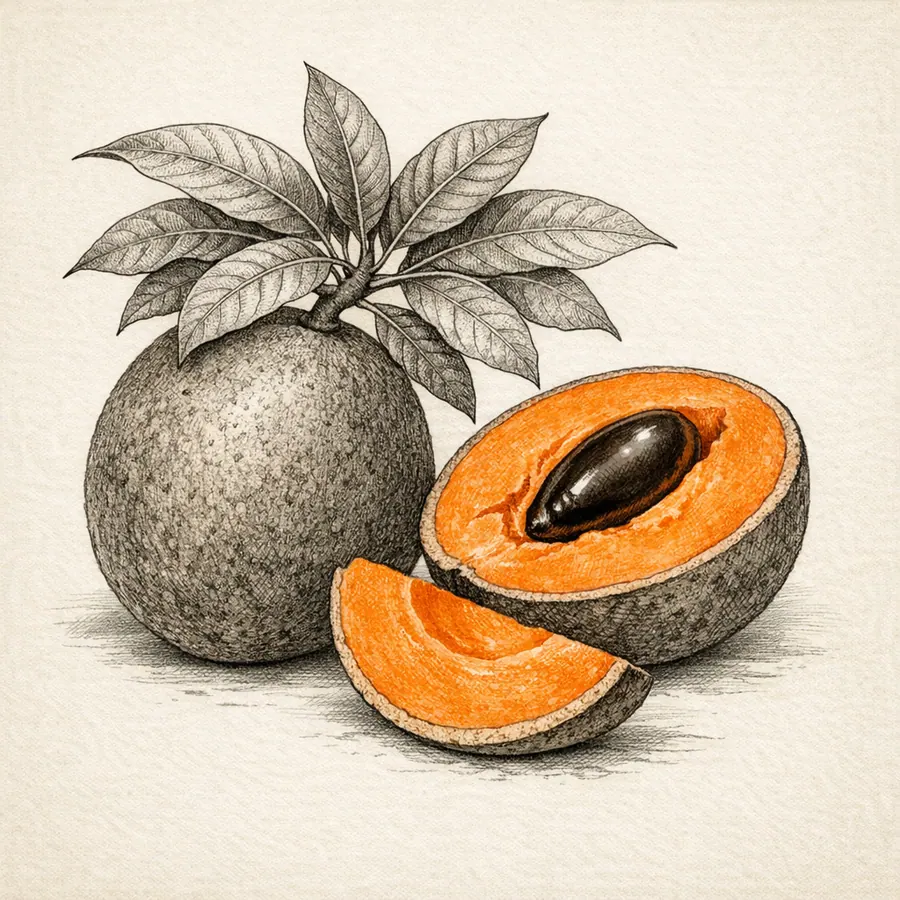
Here sapote means mamey sapote, Pouteria sapota, with ripe orange-to-reddish creamy flesh under a brown skin. Other fruits are also called sapote; do not apply this description to black sapote or white sapote.
Caribbean uses
The thick pulp suits a batido or a spoon dessert. Our yogurt cups keep it separate as a fruit layer rather than forcing the soft pulp into a diced cucumber salad.
Preparation and storage
Wash before opening. Use ripe soft flesh, remove skin and all large hard seeds, then scoop or mash the pulp. A common name or picture alone cannot identify an unknown fruit.
References and recipe note
The references support the ingredient and handling notes. The recipe is a THT editorial adaptation, not a recipe attributed to these sources or a claim of kitchen testing.
Recipe
Fruit and yogurt cups
4 small desserts
Ingredients
- 250 g mamey sapote, ripe pulp, skin and every hard seed removed, mashed
- 400 g plain pasteurized yogurt
- 15 ml cane syrup
Method
- Prepare the specified edible fruit portion, checking carefully for any peel or hard seeds that should not be included.
- Divide yogurt between four cups. Stir the syrup into the prepared fruit and spoon over the yogurt.
- Serve chilled, or cover and refrigerate until serving. This is a fresh dessert, not a shelf-stable preserve.
At the table
The creamy fruit can supply the dessert’s texture and sweetness without an elaborate filling.
At The Hidden Table, we choose the ripeness, portion and pairings around your guests, turning this ingredient into a considered part of an experience made uniquely for your table.
Plan a menu with The Hidden Table