The Hidden Table · 2026-10-27
Culinary sage
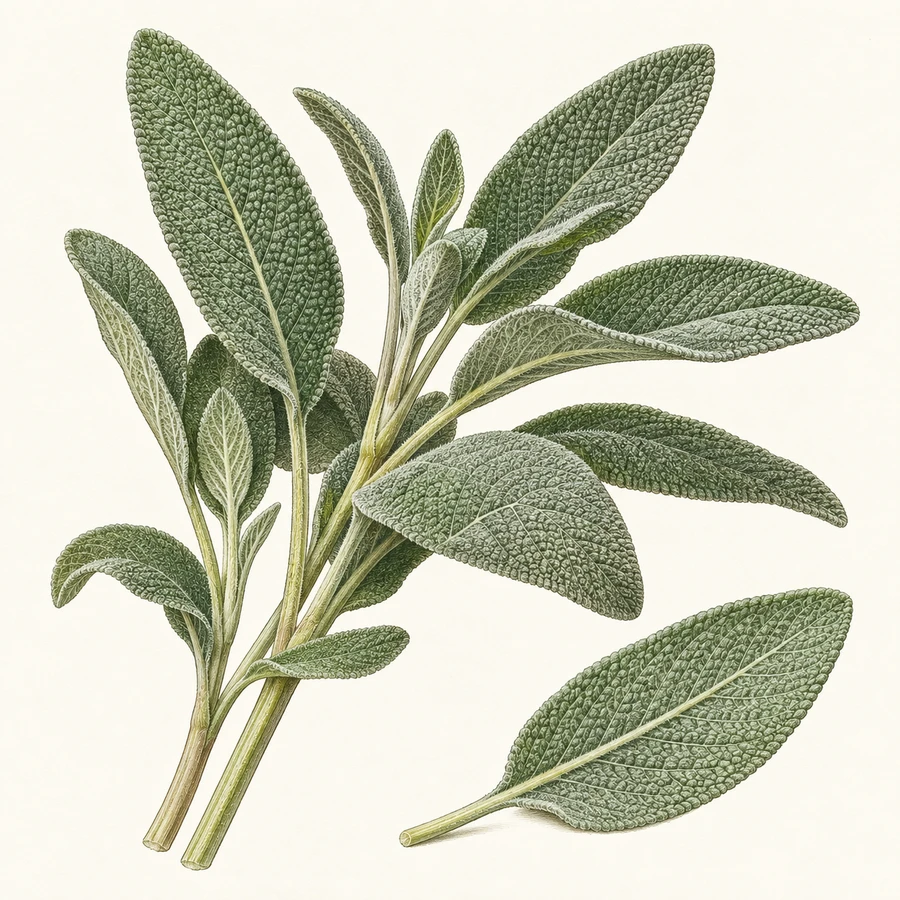
Culinary sage, commonly Salvia officinalis, has soft gray-green leaves with a strong savory aroma. A little finely chopped leaf can season a dish; it is not a medicinal extract or an instruction to use any ornamental Salvia.
Caribbean uses
Our herb-roasted potatoes are a simple accompaniment to a vegetable or roast course. The shared technique is intentional; the particular herb and measured amount remain explicit.
Preparation and storage
Choose the identified fresh culinary leaves, rinse and dry, strip off tough stems and chop very finely. Measure before adding; a whole woody sprig is not the same eating texture.
References and recipe note
The references support the ingredient and handling notes. The recipe is a THT editorial adaptation, not a recipe attributed to these sources or a claim of kitchen testing.
Recipe
Herbed roast potatoes
4 side portions
Ingredients
- 600 g potatoes, scrubbed and cut into 2–3 cm pieces
- 3 g culinary sage, fresh leaves, washed, dried, stems removed and very finely chopped
- 20 ml olive oil
- 3 g salt
Method
- Heat the oven to 200°C / 390°F. Prepare the exact fresh or dried herb form specified in the ingredient list.
- Toss potato pieces with oil, salt and measured herb. Spread in one layer on a lined tray.
- Roast about 30–45 minutes, turning once, until the centers are tender and edges golden. Check texture and serve hot.
At the table
A measured aromatic accent gives a plain potato side character without requiring a separate heavy sauce.
At The Hidden Table, we choose the amount and moment of seasoning for your guests and the dish, using the herb as part of an experience made uniquely for your table.
Plan a menu with The Hidden Table