
The Hidden Table · 2026-10-27
Purslane
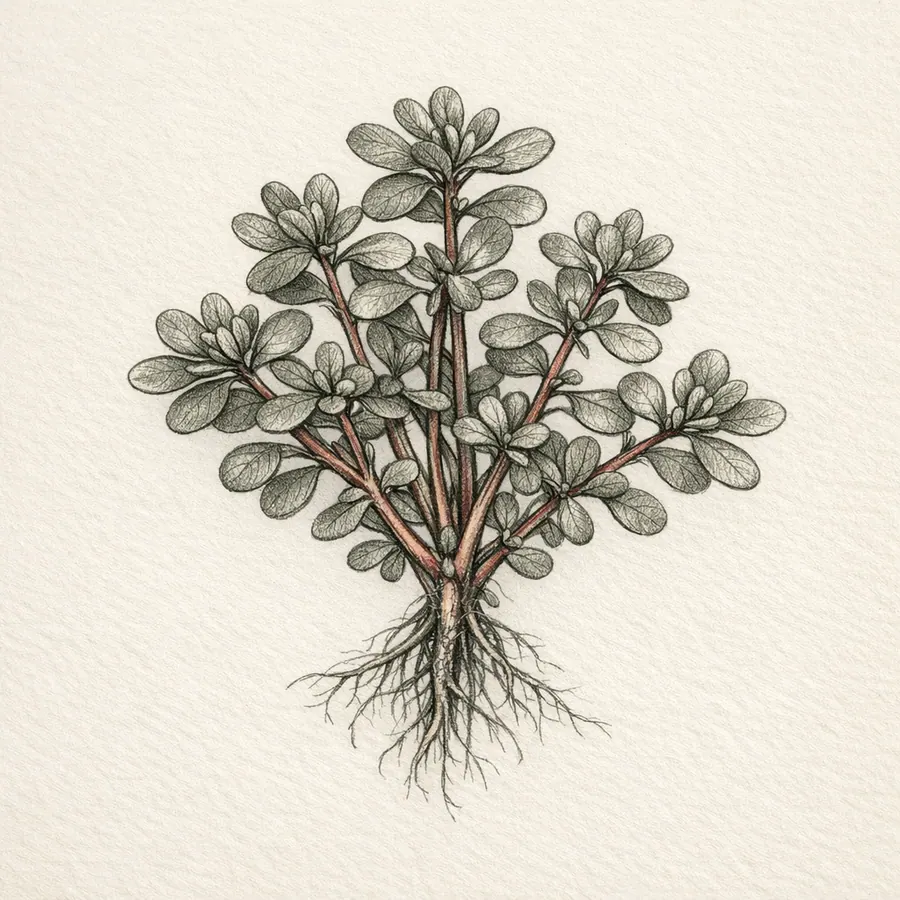
Culinary purslane here means Portulaca oleracea, with fleshy leaves and tender stems and a mildly tart character. It is not every ornamental plant sold as purslane. The succulent texture differs from a dry culinary herb.
Caribbean uses
Our tomato skillet is a practical cooked side for rice or beans. It uses the named greens, not a universal callaloo formula, and does not establish that all leaves with a shared market name cook the same way.
Preparation and storage
Confirm the specified cultivated edible species with the food supplier. Remove coarse or damaged parts, wash leaves and tender stems, then cook the measured portion; dried extracts are not an equivalent substitute.
References and recipe note
The references support the ingredient and handling notes. The recipe is a THT editorial adaptation, not a recipe attributed to these sources or a claim of kitchen testing.
Recipe
Purslane: tomato skillet
4 small side portions
Ingredients
- 300 g washed culinary purslane leaves and tender stems, coarse stems removed
- 150 g washed tomato, chopped
- 50 g peeled onion, chopped
- 10 ml oil
- 50 ml water
- 2 g salt
Method
- Use cultivated culinary greens from a reliable food supplier, not unidentified wild plants. Wash under running water, drain and prepare the specified tender leaves or stems.
- Soften onion in oil 3–4 minutes over medium heat, then add tomato for 3 minutes.
- Add greens, water and salt. Cover and cook 8–12 minutes, stirring, until tender throughout; add a little water if dry. Serve cooked, not as a raw garnish.
At the table
A real portion of cooked greens adds leaf texture and a distinct vegetable element to the meal.
At The Hidden Table, we match the actual leaf or flower and its preparation to your guests, giving it a clear purpose in a meal made uniquely for your table.
Plan a menu with The Hidden Table