
The Hidden Table · 2026-10-27
Persian lime
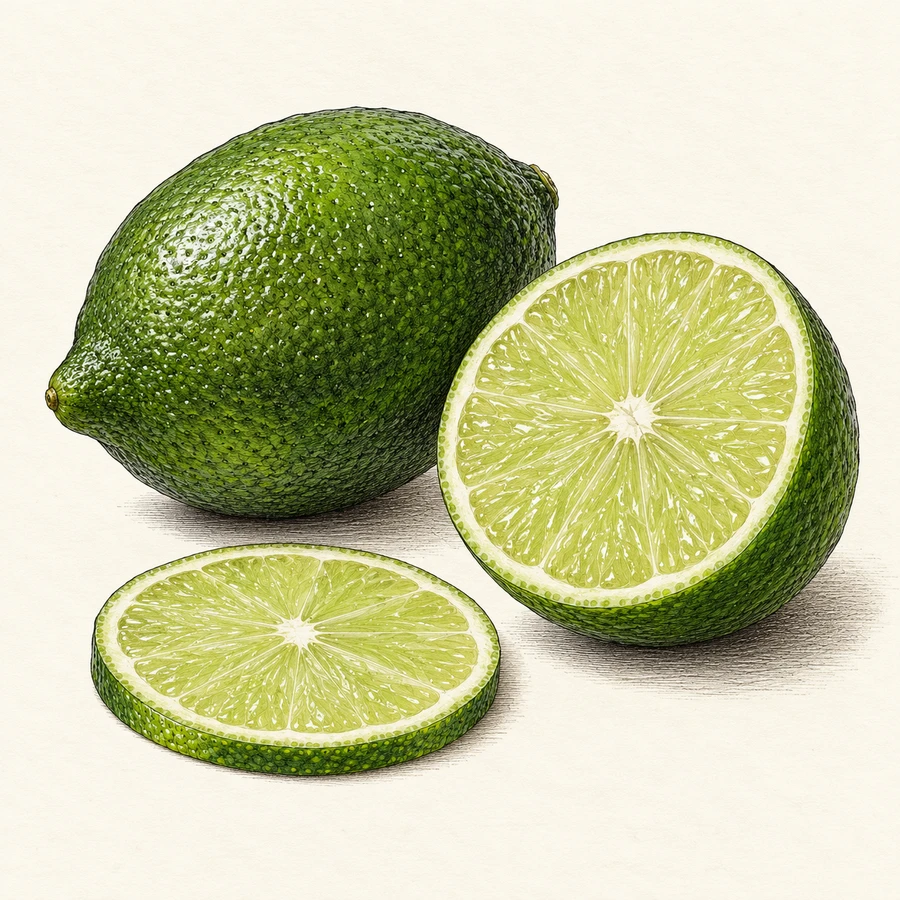
Persian lime is commonly sold as an oval green culinary lime, often larger and with fewer seeds than key lime. Check the actual fruit and strain any seeds; the name is not a guarantee that every fruit is seedless.
Caribbean uses
A small lime dressing can finish cooked vegetables or a bean salad. This is a fresh seasoning, not a method for preserving seafood or replacing its cooking.
Preparation and storage
Wash before cutting, squeeze and measure the juice. For zest, remove only the colored outer layer from washed fruit; juice and zest are not interchangeable weights or flavors.
References and recipe note
The references support the ingredient and handling notes. The recipe is a THT editorial adaptation, not a recipe attributed to these sources or a claim of kitchen testing.
Recipe
Fresh citrus dressing
About 100 ml
Ingredients
- 30 ml freshly squeezed strained juice of the specified citrus
- 45 ml olive oil
- 10 ml drinking water
- 5 ml cane syrup
- 1 g fine salt
Method
- Wash the fruit before cutting. Squeeze and strain out seeds; measure juice rather than mincing peel or whole fruit into the dressing.
- Mix juice, water, syrup and salt in a clean bowl, then whisk in oil.
- Taste on a cooked vegetable and use a small amount at service. Refrigerate any remainder immediately and use the same day; this dressing does not preserve food or replace cooking.
At the table
The juice supplies acidity in a measured amount while the main ingredient remains recognizable.
At The Hidden Table, we choose the fruit, acidity and portion for your guests and the dish, giving citrus a precise place in an experience made uniquely for your table.
Plan a menu with The Hidden Table