The Hidden Table · 2026-10-27
Makrut lime leaf
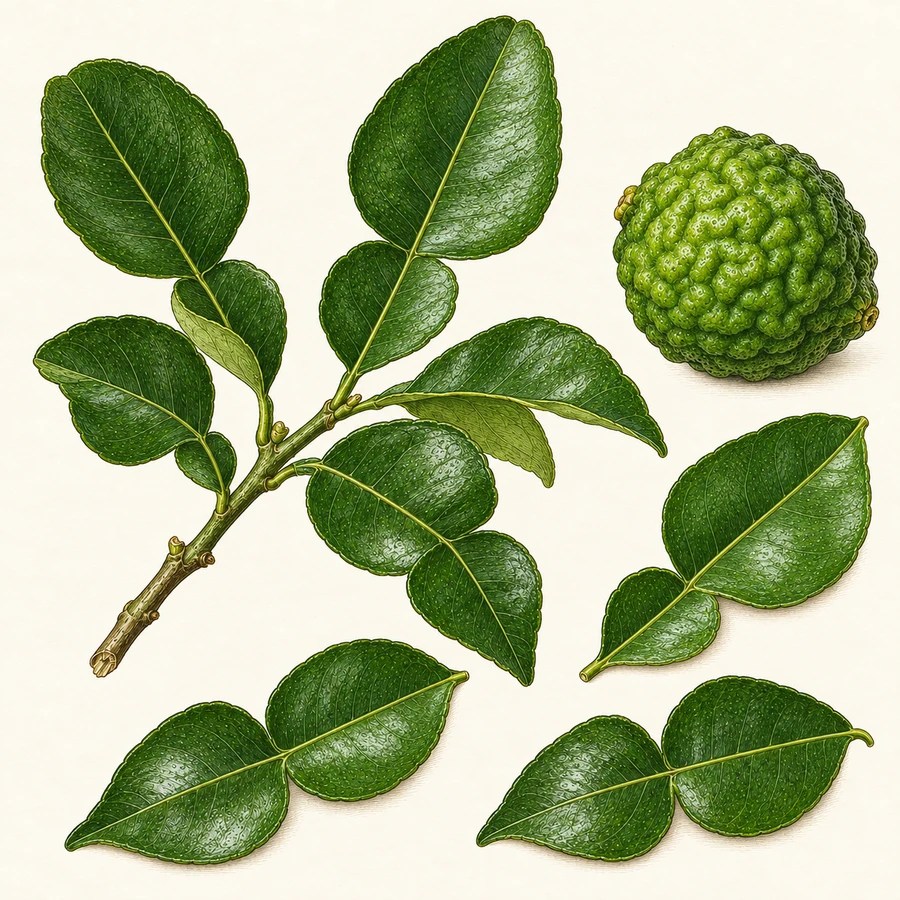
This recipe selects the documented culinary leaf of Citrus hystrix, known as makrut lime or combava. Its broad winged petiole gives a joined double-leaf appearance. It is not a recipe for arbitrary leaves from any lime tree.
Caribbean uses
Makrut leaves have documented Southeast Asian culinary use. Our vegetable soup is a contemporary menu adaptation, not a claim that this is the ordinary leaf used by every Caribbean household.
Preparation and storage
Buy identified food-grade leaves, wash and keep the pieces retrievable. Do not substitute garden foliage, leaf extracts or essential oils. Remove leathery pieces before service.
References and recipe note
The references support the ingredient and handling notes. The recipe is a THT editorial adaptation, not a recipe attributed to these sources or a claim of kitchen testing.
Recipe
Vegetable soup with makrut leaf
4 small bowls
Ingredients
- 2 fresh food-grade makrut lime leaves (Citrus hystrix), washed
- 200 g peeled potato in 1 cm cubes
- 200 g washed carrot in 5 mm pieces
- 600 ml water
- 100 ml unsweetened culinary coconut milk
- 2 g salt
Method
- Simmer potato, carrot, water and salt 15–20 minutes until the vegetable centers are tender.
- Tear each identified culinary leaf once to release aroma, keeping pieces large enough to retrieve. Add leaves and coconut milk and simmer gently 5–8 minutes.
- Remove every leaf piece before serving the soup hot. The leathery leaves are an aromatic infusion, not a raw chopped garnish or essential oil substitute.
At the table
An identified aromatic leaf adds a precise citrus note without adding tough leaf strips to the bowl.
At The Hidden Table, we choose the exact culinary product and a modest portion for your guests, making its flavor or texture purposeful in an experience created for your table.
Plan a menu with The Hidden Table