The Hidden Table · 2026-10-27
Duck
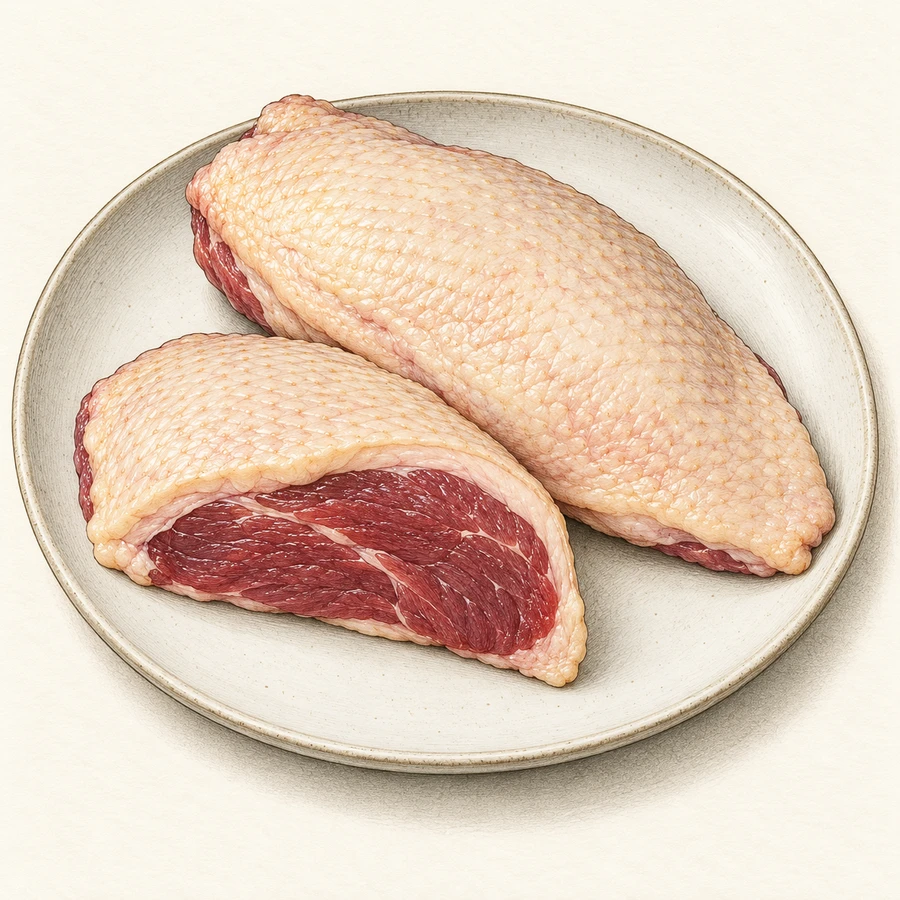
Duck is poultry with a pronounced flavor and, on skin-on cuts, a layer of fat that can be rendered during cooking. The cut matters: a breast cooks differently from a leg intended for slow cooking.
Caribbean uses
Duck can be served with cooked roots or rice and a citrus accompaniment. The breast recipe below is a THT menu idea, rather than a single traditional Caribbean method.
Preparation and storage
Keep raw duck refrigerated and separate from ready-to-eat food. Do not wash raw poultry. Use a thermometer: poultry must reach 74°C / 165°F; pink color alone is not a safety check.
References and recipe note
The references support the ingredient and handling notes. The recipe is a THT editorial adaptation, not a recipe attributed to these sources or a claim of kitchen testing.
Recipe
Duck breast with orange and thyme
4 small portions
Ingredients
- 600 g boneless duck breast, skin on
- 30 ml orange juice
- 5 g fresh thyme leaves
- 3 g salt
Method
- Heat the oven to 180°C / 350°F. Pat the duck dry with paper towel and salt it. Keep raw-poultry utensils away from cooked food.
- Place skin-side down in an oven-safe pan over medium heat. Cook until the skin browns and releases fat, about 8–12 minutes; pour off excess fat carefully.
- Turn over and transfer to the oven. Cook until the thickest part reaches 74°C / 165°F, checking with a thermometer rather than relying on time or color.
- Transfer to a clean board. Add orange juice and thyme to the hot pan, simmer briefly, then serve the sliced duck with the cooked pan juices.
At the table
Rendered skin supplies contrast, while a modest citrus finish balances the richness.
At The Hidden Table, we adapt the menu, portion and accompaniments to your guests and occasion. Tell us which ingredients you enjoy and any dietary restrictions when planning your meal.
Plan a menu with The Hidden Table