
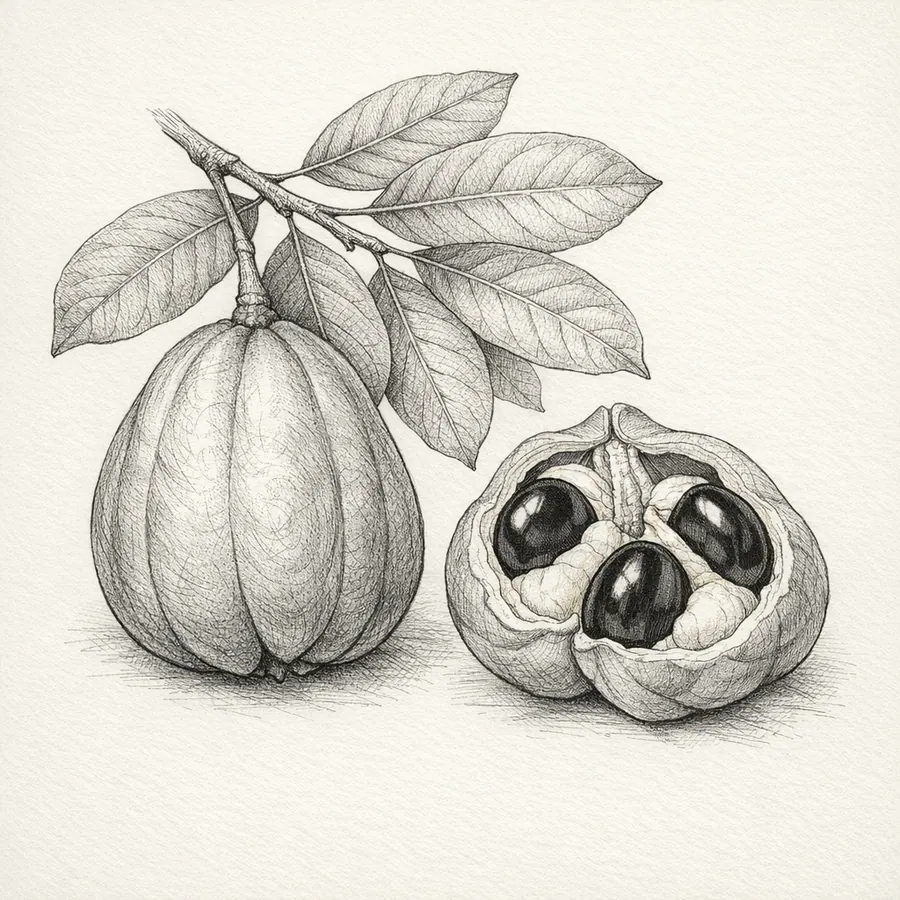
Ackee

Ackee is a delicate fruit cooked as a savory ingredient, especially known through Jamaica's ackee and saltfish. It becomes useful when the cook gives it a clear job: comfort, brightness, aroma, body, crunch, heat, or cultural memory.

Ackee is a delicate fruit cooked as a savory ingredient, especially known through Jamaica's ackee and saltfish. Its flavor depends on freshness, maturity, cut, and heat, so it can read as juicy and seasonal. Its character changes again when it is served ripe with lime, grilled, pickled while green, and reduced into a glaze. A reader should leave this page knowing how Ackee behaves in the kitchen: served ripe with lime, grilled, pickled while green, and reduced into a glaze are the usual starting points, while dishes such as ackee and saltfish, breakfast plates, savory sautees, and salt cod dishes show how Caribbean cooks make it familiar.

Ackee's Caribbean history includes West African origins, Jamaican identity, careful handling, and the knowledge that ripeness and safety matter before cooking. For The Hidden Table, the cultural value of Ackee is not nostalgia. It is the chance to show how a familiar ingredient can move from home cooking into a precise private dining experience without losing warmth.

Ackee works best when its role is specific. In traditional and contemporary menus, it can support dishes such as ackee and saltfish, breakfast plates, savory sautees, salt cod dishes. The strongest preparations are usually the clearest ones. If Ackee is grilled, the garnish and sauce should explain rather than hide that choice.

Ackee is commonly served ripe with lime, grilled, pickled while green, reduced into a glaze. Typical Caribbean uses include ackee and saltfish, breakfast plates, savory sautees, salt cod dishes.

Water, natural sugars, fiber, acidity, color, and vitamin-rich freshness.

Uses at the table

  • Ackee can be grilled when the menu needs a direct, recognizable preparation.
  • Ackee can appear in ackee and saltfish to connect the dish to everyday Caribbean cooking.
  • Ackee can be paired with citrus, herbs, chile, coconut, smoke, or sea salt so the flavor feels intentional rather than flat.
  • Ackee can be scaled for a tasting menu as a small, precise element or served family-style when generosity matters more than formality.
  • Ackee can help a server tell a short story about season, source, technique, or memory without turning dinner into a lecture.

What does Ackee taste like?

Ackee does not have one fixed taste. It changes with source, maturity, and technique, but the most important cues are juicy, seasonal, and how it carries seasoning.

Where is Ackee commonly used?

You will often see Ackee around ackee and saltfish, breakfast plates, savory sautees, salt cod dishes, though the exact use changes by island, household, and season.

How should Ackee be prepared?

Start with the traditional logic of the ingredient: served ripe with lime, grilled, pickled while green, reduced into a glaze. Then add contrast with acid, salt, herbs, heat, fat, or crunch.

Why does Ackee matter for The Hidden Table?

Ackee helps connect private dining to Caribbean place and memory. It gives the menu cultural weight without needing the plate to feel old-fashioned.