The Hidden Table · 2026-11-09
Irish Soda Bread Scones at Your Villa Breakfast: Portioning and Doneness to Confirm
Wondering how Irish soda bread scones should be portioned and checked? Read this to brief your private chef with confidence and reconcile their proposal before breakfast morning.
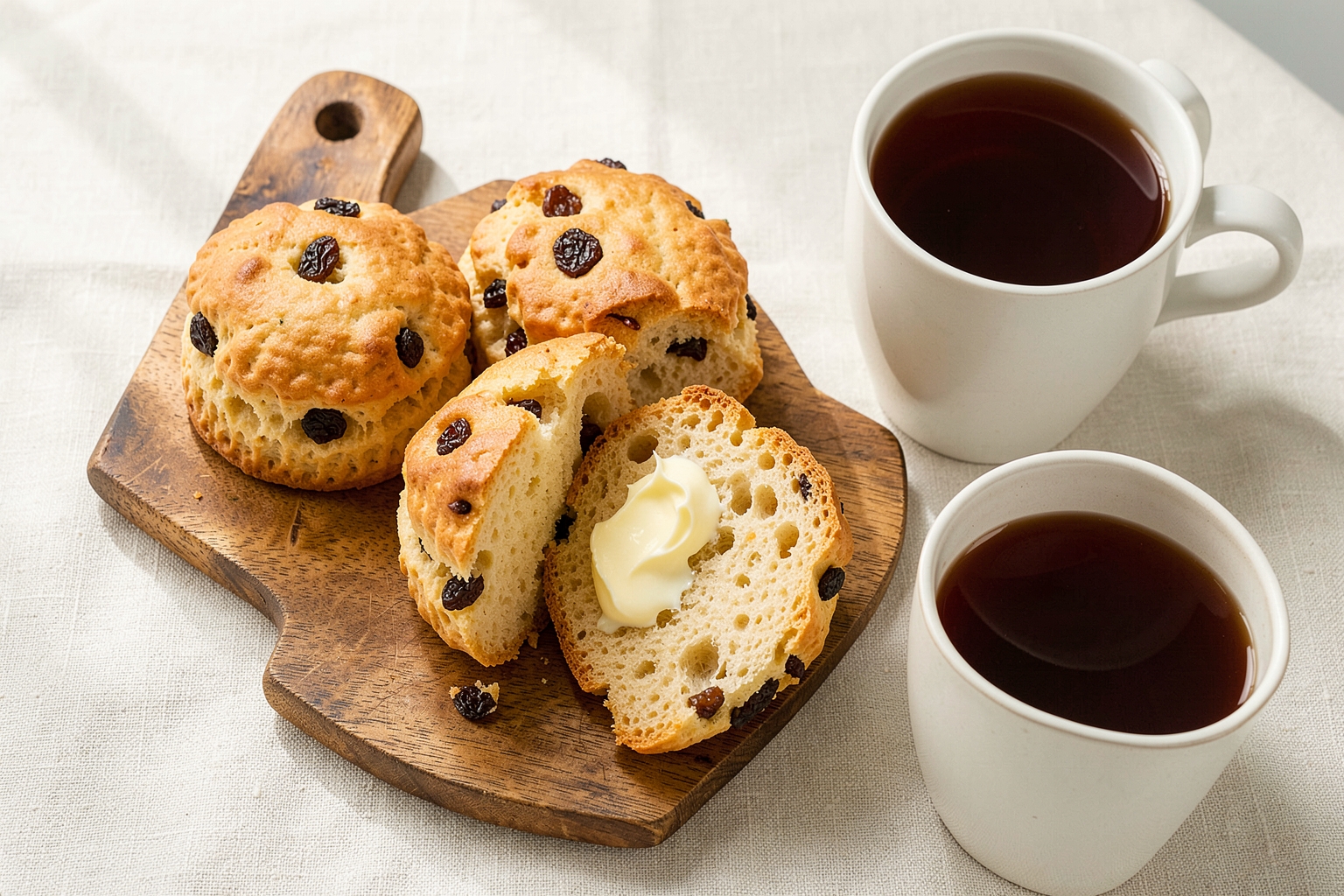
You have asked your private chef to bake Irish soda bread scones for a villa breakfast, and now you are wondering what to actually confirm.
Start with two questions for your chef: how they will portion the batter and how they will check doneness.
This article walks through the documented method for both, so you can send a short, specific brief and reconcile it with your chef's own proposal.
The method below comes from a published recipe for Irish soda bread scones contributed by Maggie Simonds to Boston Medical Center's recipe collection.
It describes the scones as a twist on classic Irish soda bread, crumbly on the outside and chewy on the inside, with raisins adding sweetness.
That published version is the reference point here.
Whether your chef follows it, adapts it or uses a different recipe entirely is exactly what your brief should ask.
What the published recipe documents
The recipe serves 16 and lists its times separately: 15 minutes of prep and 30 minutes of cook time, with a total time of 45 minutes.
Keep those figures separate when you plan the morning.
A chef may work faster or slower, and the published numbers describe that specific recipe rather than a universal session length.
The ingredient list includes sifted white flour, baking powder, baking soda, white sugar, softened salted butter, raisins, one large egg, buttermilk, and optional jam for serving.
Two notes in the recipe matter for planning.
First, the butter should sit out on the counter for one to two hours before making the scones so it softens.
Second, the buttermilk is flexible: the recipe says you may not need to use all of it, and that if the mixture still looks dry you can add an additional splash.
That buttermilk note is worth turning into a question for your chef.
The published recipe leaves the judgment to the baker, so ask how your chef will decide when the batter is moist enough.
Do not assume a fixed amount will be poured in.
Portioning: the half-cup scoop on parchment
The documented portioning step is specific.
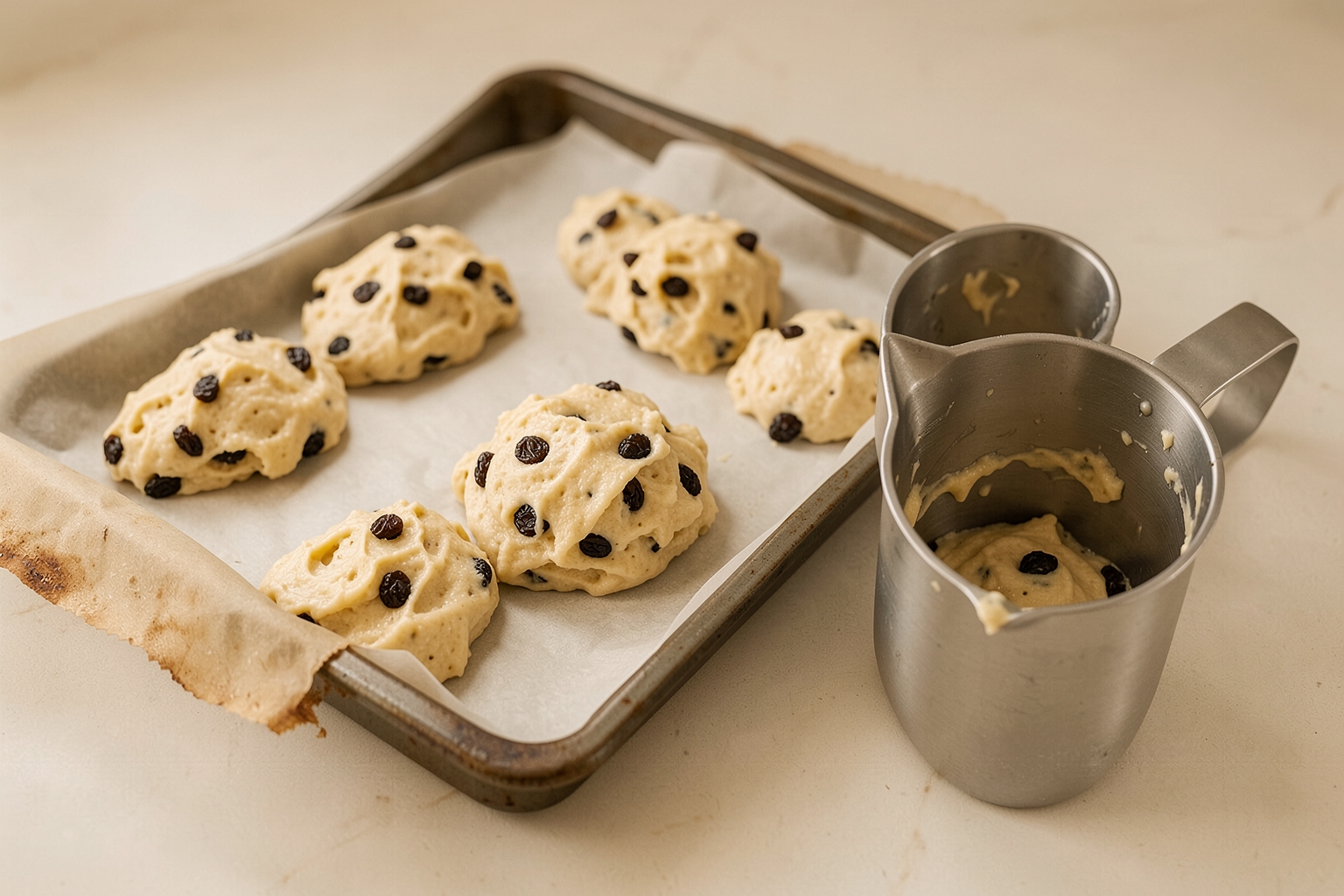
After the batter comes together, preheat the oven to 350°F and line a baking sheet with parchment paper.
Then scoop the batter with a half-cup measuring cup onto the sheet.
That is the whole portioning instruction: one measure, one liner, one sheet.
Why does this matter for your brief?
The recipe gives the half-cup portion and baking instructions together.
Ask how the chef would check a different portion size.
If your chef portions smaller or larger mounds, the timing and the doneness cues may need to change, and only your chef can say how.
So the confirmation is not 'use a half-cup scoop' as a demand.
It is: 'Will you portion with a half-cup measure onto a parchment-lined sheet, or do you plan a different size and shape?
If different, what bake time and doneness check will you use instead?'
Parchment is the other half of the step.
The published instructions call for a parchment-lined baking sheet.
Confirm the lining with your chef.
If your chef prefers a different liner or a greased pan, that is a legitimate alternative to hear out; the point of the brief is to know the plan, not to dictate it.
Doneness: golden tops and a dry toothpick
The recipe's doneness check has two cues.
Bake for 30 minutes, or until the tops of the scones look golden brown and a toothpick inserted comes out dry.
Both cues together, not one alone.
The source gives the golden top and dry toothpick as cues for this recipe.
Ask how your chef will use them.
When you confirm with your chef, name both cues.
A useful phrasing: 'Will you check for golden-brown tops and a dry toothpick, as the published recipe does, or do you judge doneness another way?'
If the chef proposes another cue, ask them to explain how they will use it for these scones.
Record the agreed check in your brief.
What you want in the brief is a stated check you can both refer to, not a promise that the scones will look a certain way.
One more documented step belongs here: the recipe says to allow the scones to cool on the counter before serving.
That cooling pause is part of the published method, so if your breakfast timing is tight, ask how the chef will fit it in.
Warm-from-the-oven service is a different proposal from the documented one, and it is fair to ask what the chef intends.
Serving: butter, jam and tea
The recipe suggests serving the scones with a dollop of butter or jam, or alongside a cup of Irish Breakfast tea.
Those are the documented accompaniments, and they translate easily to a villa breakfast table.
Wanting something else on the board, such as fruit or eggs, is your menu design choice to propose.
The chef must confirm feasibility; the published recipe does not establish it.
The recipe also lists jam as optional in the ingredients, so if jam is essential to how you picture the table, say so in the brief rather than assuming it will appear.
A short brief line you can send
Here is a compact request you can adapt and send, framed as something to reconcile with your chef's written proposal rather than a settled agreement:
- Portioning: half-cup measuring cup onto a parchment-lined baking sheet, or your alternative portion size with its own bake adjustment.
- Oven: 350°F, per the published recipe, or your preferred setting with reasoning.
- Time: about 30 minutes for the documented portion size, adjusted as you judge fit.
- Doneness: golden-brown tops and a dry toothpick, or your stated alternative check.
- Finish: cooling on the counter before service, and serving with butter or jam, plus tea if wanted.
- Batter moisture: how you will judge the buttermilk, since the recipe allows for not using all of it.
Send it early enough that the chef can respond before shopping day.
A late question can require discussion, but it does not automatically impose a fee or force compromises.
That depends on your booking terms, which you should check rather than assume.
What this article does not claim
The published recipe documents ingredients, steps and cues for one version of Irish soda bread scones.
It does not tell you whether any particular chef has tested this dish, whether it appears on any specific menu, or how your guests will respond to it.
Those are questions for your chef and your booking conversation.
The nutrition figures listed with the recipe describe that recipe's servings and do not certify a different adaptation.
It is also worth being clear about what a written brief achieves.
A confirmed brief states what was communicated.
It does not by itself prove both sides understood every term the same way.
Treat the chef's reply as a proposal to reconcile with your requirements, and ask follow-up questions where anything is unclear.
Planning the rest of the breakfast around the scones
Once portioning and doneness are settled, the scones become one anchor on the table rather than the whole plan.
The documented recipe yields 16 servings, so ask how the chef will scale it for your group.
Also ask whether the bake can be timed to land near the rest of the breakfast.
Ovens vary, and the chef who knows the villa's equipment is the right person to judge that.
If you are still deciding how a private chef breakfast fits your trip, it helps to read about the booking process and what to prepare before the chef arrives.
The handover checklist for hosting a private chef covers villa access and kitchen readiness, and the Cap Cana private-chef guide compares quotes, timing and service expectations.
For a broader view of the format, the private chef versus restaurant comparison explains when each suits a group.
If your breakfast menu is still open, the fruit crisp article looks at a similar portioning question for a baked sweet, ramekins versus one shared dish.
The decision is simple: either confirm the documented method or ask your chef to state an alternative before the breakfast.
The documented method is a half-cup scoop on parchment, 350°F, about 30 minutes, golden tops and a dry toothpick.
Ask the chef to confirm which method they intend to use.
What matters is that the plan is stated, reconciled and agreed before the morning begins.
Source references: www.bmc.org.
Experience The Hidden Table. Bring your curiosity about Dominican food to your next dining experience.
Explore The Hidden Table experiences and book an experience.